

Prof. Dr. Carsten Strohmann
TU Dortmund University
Inorganic Chemistry
Otto-Hahn-Str. 6
D-44227 Dortmund
Room: C2-05-332
Germany
Phone: +49 231 755 3807
Fax: +49 231 755 3797
E-Mail: carsten.strohmann@tu-dortmund.de
Secretariat
E-mail: office-strohmann.ccb@tu-dortmund.de

Social media:

Degrees and awards at the graduation ceremony on the 19th day of chemistry
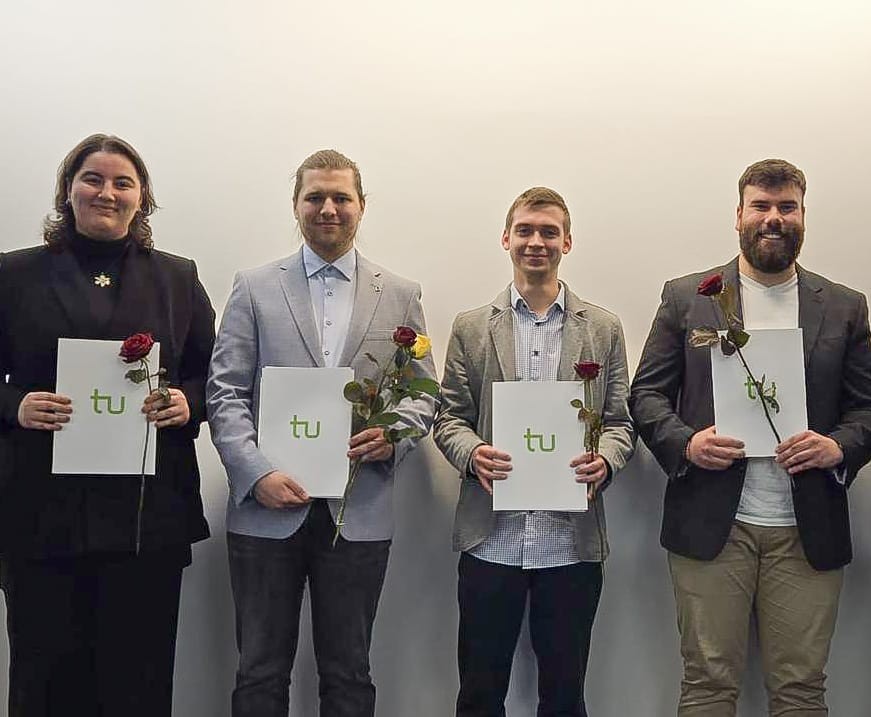
On February 13/2026 graduates of the faculty of chemistry and chemical biology were honored for their achievements at this years „Tag der Chemie“. Among many others, Paul Erik Schneider and Jan Frederick Wappelhorst from our own group presented their latest research in form of a lecture and a poster.
In the evening ceremony, this year's bachelor's, master's, and doctoral students were honored. From our group, Yurdagül Hergül, Seraphim Schleining, Raphael Wennehorst, and Joe Fischer successfully completed their bachelor's degree.
Joe Fischer was even honored for his outstanding achievements. In addition, Thokozire Sweetland and Michael Nuss successfully completed their master's degree, and Jan-Lukas Kirchhoff successfully completed his doctorate in 2025.
We are delighted to welcome Thokozire Sweetland as a doctoral student in our research group and wish Michael Nuss every success with his doctoral studies in Prof. Dr. Andreas Steffen's research group.
We also congratulate all other graduates on their outstanding achievements and wish them every success in their future careers.
Ligand Polarization by Heavy Group-14 Elements: New Insights into Vinyl–Copper(I) π-Coordination
In our recent publication in Inorganic Chemistry, we report on the targeted formation of vinyl–Cu(I) π-complexes using vinylic tris(thioether) ligands. The study focuses on the influence of ligand polarization on π-coordination at copper(I).
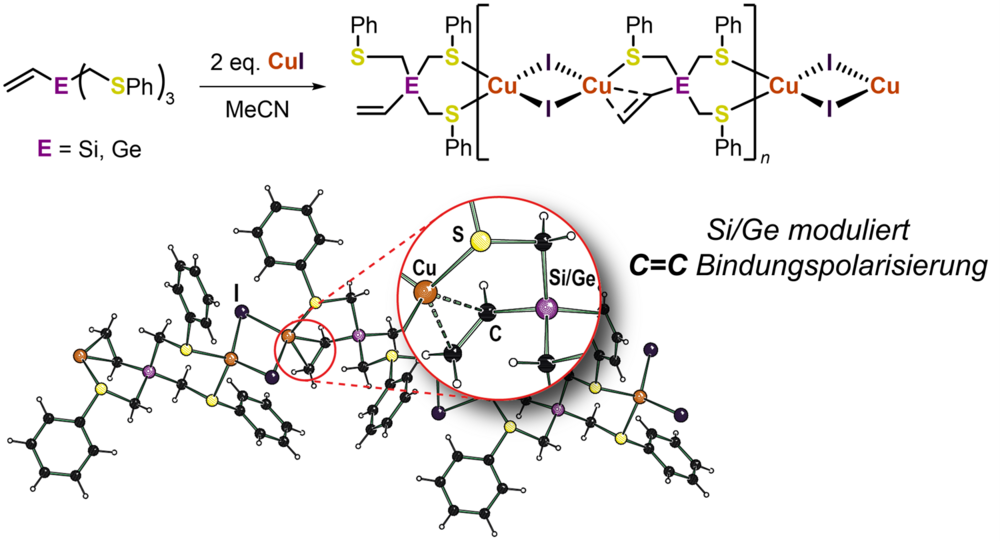
hrough a systematic comparison of C-, Si-, and Ge-substituted ligands, we demonstrate that only the combination of main-group element polarization and a soft sulfur donor environment enables the formation of stable Cu(I) π‑complexes. High-resolution single-crystal X-ray diffraction data provide, for the first time, direct experimental access to the electron density associated with the vinyl–Cu(I) interaction. Further details can be found on the following side or in the original publication.
We thank the Fonds der Chemischen Industrie and the Studienstiftung des deutschen Volkes for their financial support.
Polarization Effects of the Heavier Group 14 Elements on Vinylic Carbon–Carbon Double Bonds: Enabling an Unusual π-Coordination of Copper(I) Iodide in Coordination Polymers
J. Wattenberg, T. Schrimpf, P. E. Schneider, P. E. Braun Streb, M. Knorr*, R. Wang, U. Englert* und C. Strohmann*
Inorg. Chem. 2026, 65, 8, 4515–4527.
Combining theory and experiment for new insights into halogen bonds
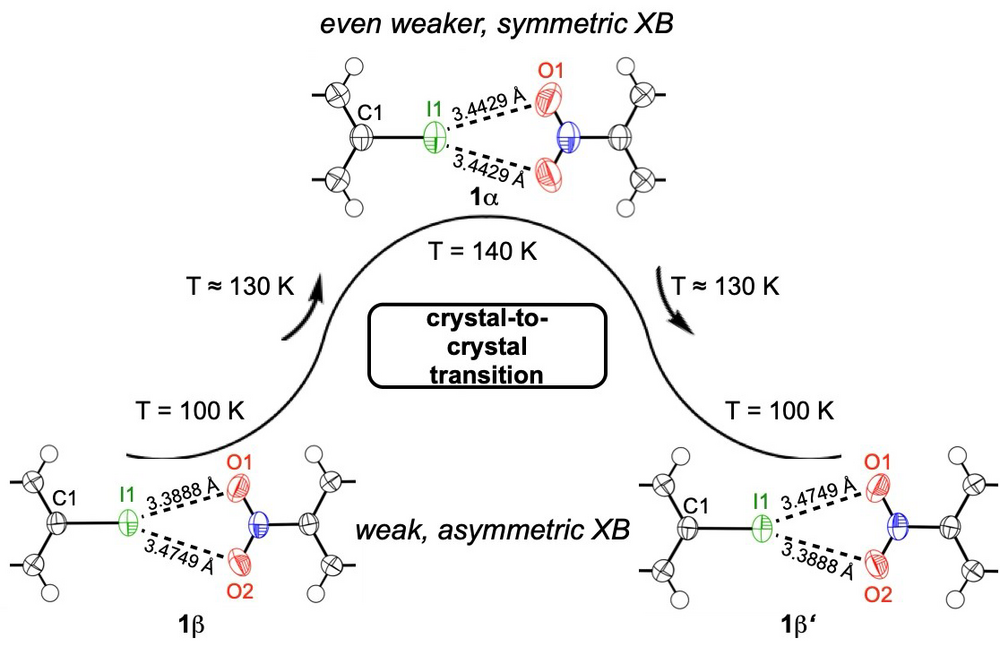
As part of an international research project, we recently reported new insights into so-called ‘fluxional’ halogen bonds in the journal Chemistry – A European Journal. Based on studies of the bifurcated halogen bond between 1,4-diiodobenzene and 1,4-dinitrobenzene, new insights into this structural motif were obtained through temperature-dependent single-crystal X-ray diffraction, experimental electron density studies and complementary quantum chemical calculations.
We thank the Fonds der Chemischen Industrie and the Studienstiftung des deutschen Volkes for their financial support.
Further information can be found on the following page or in the original publication:
Fluxional Halogen Bonds Versus Interlayer Stacking – Theory Meets Experiment
C. Y. Gao, A. Schmidt, R. Wang, C. Strohmann,* U. Englert,* S.-D. Li*
Chem. Eur. J. 2025, e02514.
Poster Award for Sasha Conrad at the GDCh Science Forum Chemistry in Karlsruhe
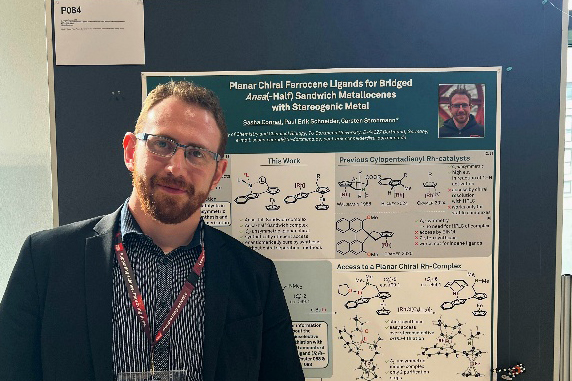
At the GDCh Science Forum Chemistry 2025 [formerly the GDCh Wissenschaftsforum Chemie (WiFo)], Sasha Conrad received the RÖMPP Poster Award (sponsored by Thieme) for his poster titled “Planar Chiral Ferrocene Ligands for Bridged Ansa(-Half) Sandwich Metallocenes with Stereogenic Metal.”
Among more than 100 posters presented, the work by Sasha Conrad and Paul Erik Schneider was selected for the only poster prize awarded at Germany’s largest GDCh conference.
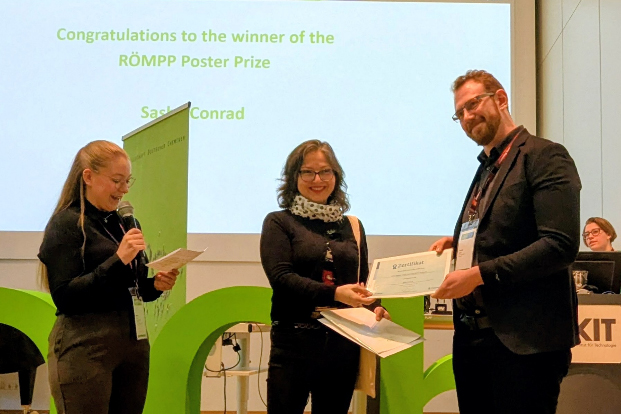
We extend our sincere thanks to the selection committee consisting of representatives from Thieme, the GDCh, and the JCF, as well as to the organizers of the conference for creating such an excellent setting. We wish Sasha Conrad continued success in his academic pursuits.
Science Forum Chemistry 2025 „Thinking across borders”
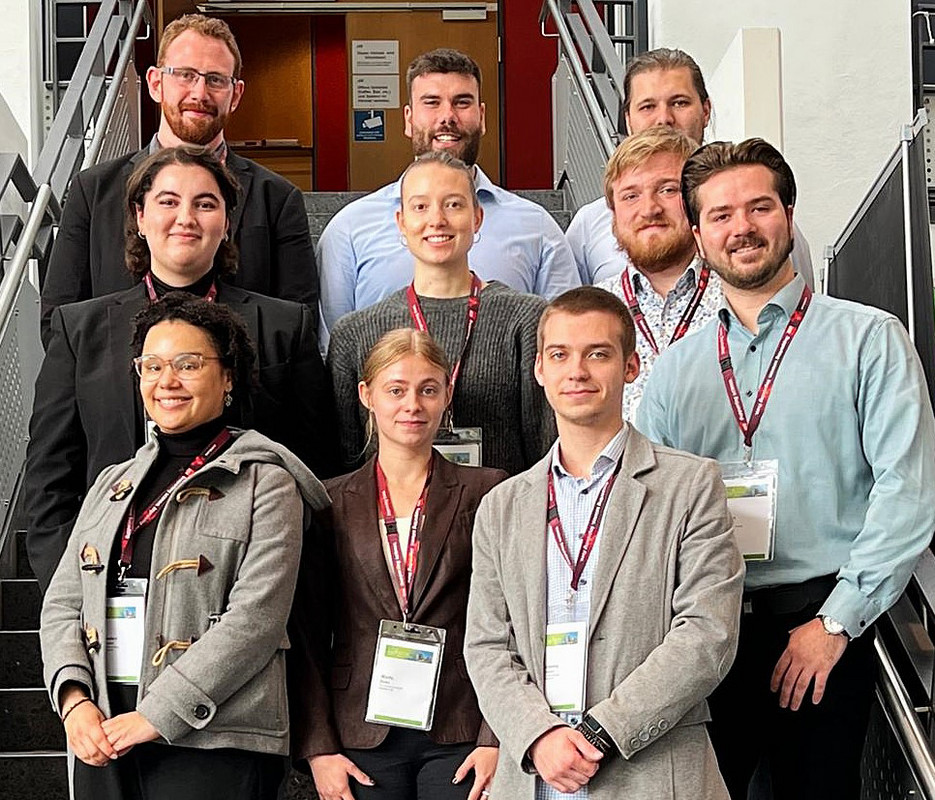
This year, the first GDCh Science Forum Chemistry took place in Karlsruhe from september 29 to october 1. The Science Forum Chemistry is a new edition of the former Wissenschaftsforum and repeats every two years in a different German city. At this most important German chemistry congress with the motto “thinking across borders” renowned scientists from all over the world have the opportunity to present their research in scientific lectures and posters.
This year, Beata Moritz, Joe Fischer, Kai Schäper, Raphael Wennehorst, Seraphim Schleining, Yurdagül Hergül, Sasha Conrad, Mara Schöler, Jan Frederick Wappelhorst and Tristan Mairath had the opportunity to participate in this conference and present their research in form of scientific posters. From more than 100 posters Sasha Conrad's stood out in particular and he won this year's poster award.
We would like to thank the GDCh, not only for organizing the conference, but also for providing several travel grants for all participants from our group. As well we thank the sponsors of the poster award, RÖMPP and Thieme.
Investigations on the mechanism of anionic polymerisation
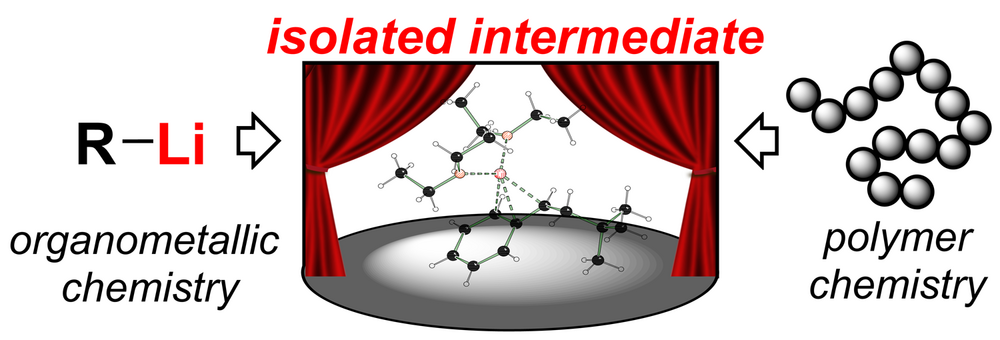
In our publication in Angewandte Chemie, we report on new insights into the mechanism of anionic polymerisation. Despite its long history and diverse fields of application, including in the chemical industry, the intermediate of this polymerisation process had not yet been isolated.
By carefully selecting the conditions, we were able to stop chain growth after the initiation step and isolate the intermediate formed by crystallisation. This now forms the active molecule for further propagation steps and is also the model for the active chain. Single-crystal X-ray structural analyses were used to elucidate the structure in the solid state, which was also confirmed in solution by extended NMR studies. Reactivity studies using in situ FT-IR spectroscopy provided insights into the formation of the intermediate in different solvents, and mechanism hypotheses could be proposed based on DFT calculations.
We would like to thank the Fonds der Chemischen Industrie and the Studienstiftung des deutschen Volkes for their financial support.
Further information can be found on the following page or in the original publication:
Stopping the Chain: Isolated Molecular Intermediates of Anionic Styrene Polymerization A. Schmidt, C. Strohmann*,
Angew. Chem. Int. Ed. 2025, e202510397.
„Stopping the Chain“: Isolierte molekulare Zwischenstufen der anionischen Styrolpolymerisation A. Schmidt, C. Strohmann*,
Angew. Chem. 2025, e202510397.
OMCOS XXII 2025 in Kyoto
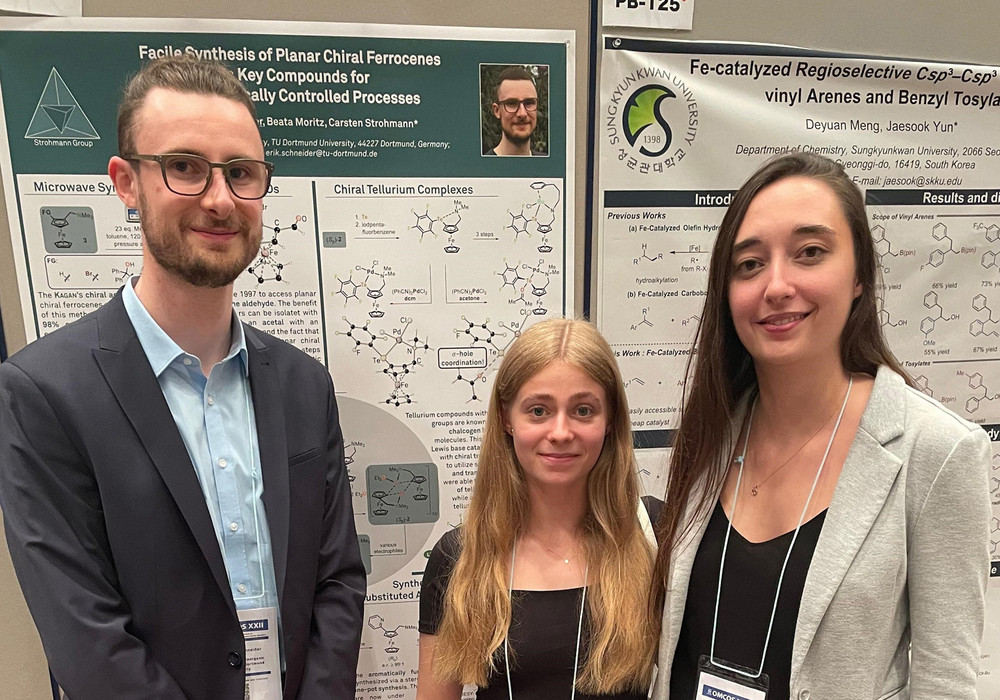
Beata Moritz, Paul Erik Schneider and Annika Schmidt from our research group participated in this year's 22nd International Symposium on Organometallic Chemistry (OMCOS). The conference, held in Kyoto, Japan, was themed ‘Organometallic Chemistry Directed Towards Organic Synthesis’ and focused on the latest research findings in the fields of (enantioselective) catalysis, mechanism investigations and applications in the pharmaceutical synthesis with organometallic compounds.
The members of our working group were able to contribute to the international programme with poster presentations. Beata presented the results of her bachelor's thesis on the poster ‘Planar Chiral Ferrocenes as Key Compounds for Asymmetric Catalysis’. Paul presented his approach to chiral ferrocenes for asymmetric-controlled processes and Annika presented her results on the investigation of the mechanism of anionic polymerisation.
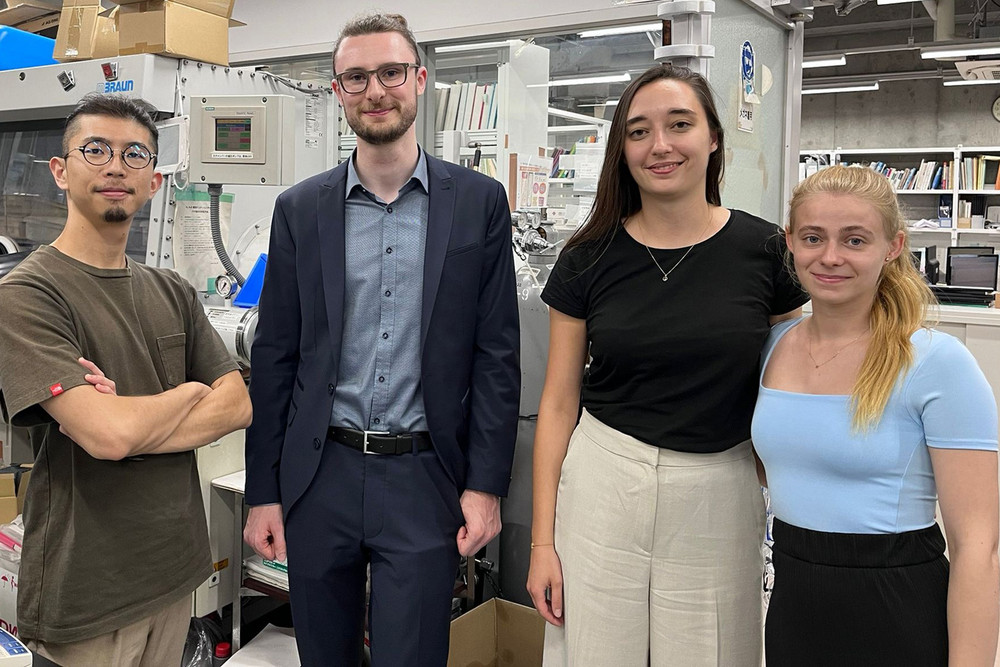
During their time in Kyoto, Beata, Paul and Annika also had the opportunity to visit the laboratory of a colleague at Kyoto University and exchange information about their current research results.
We would like to thank the German Chemical Society for the financial support in the form of a travel grant, the Fonds der Chemischen Indutrie, and the Studienstiftung des deutschen Volkes for its financial support in the form of doctoral scholarships, as well as the conference organisers for a successful conference.
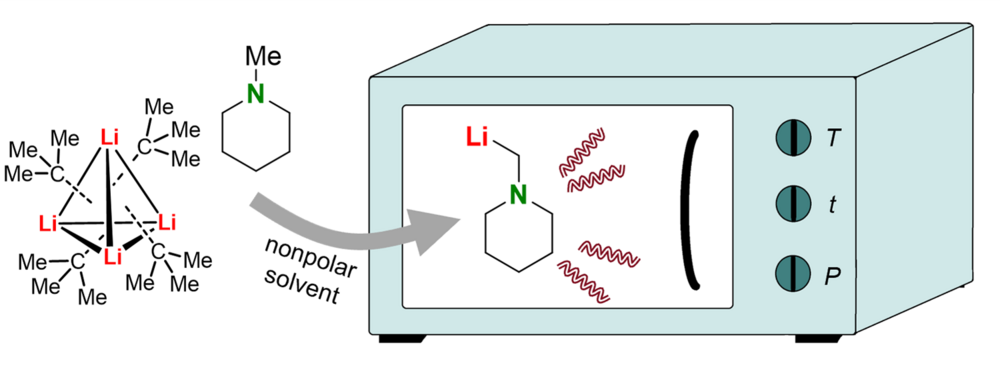
In our publication in Chemistry – A European Journal, we present the application of microwave technology for deprotonations with lithium alkyls. In the absence of polar additives, the targeted energy input of the microwave enabled the successful deprotonation of a tertiary amine.
The amine itself leads to the deaggregation of the lithium alkyl, as shown by a solid-state structure obtained. Our method has opened up a new approach to the deprotonation of kinetically hindered substrates, which avoids toxic intermediates and allows versatile synthetic reuse of the lithiated species.
We would like to thank the Deutschen Forschungsgemeinschaft, the Fonds der Chemischen Industrie and the Studienstiftung des deutschen Volkes the for their financial support.
Further information can be found on the following page or in the original publication:
Microwave Radiation for Organolithium Chemistry: Mechanistic Studies on the Direct α-Metalation of a Tertiary Amine
A. Schmidt§, R. Scheel§, A. Ost, L. Brieger, C. Strohmann* Chem. Eur. J. 2025, e02149.
74th Lindau Nobel Laureate Meeting on Chemistry
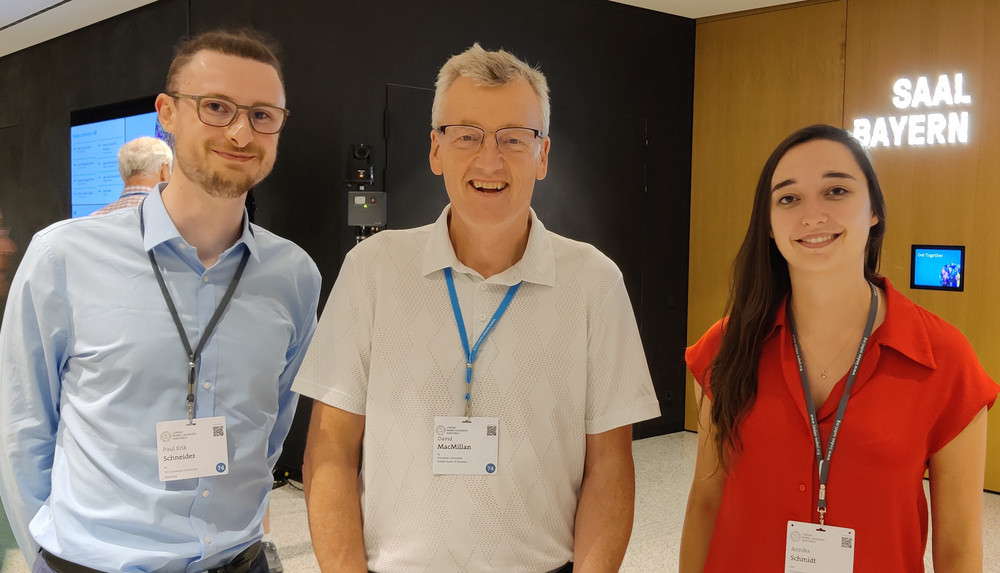
t the 74th Lindau Nobel Laureate Meeting (29 June – 4 July 2025), 33 Nobel Laureates came together with over 600 selected young scientists from all over the world to exchange ideas on current developments in chemistry and related scientific disciplines. Annika Schmidt was selected through the highly competitive multi-stage selection process of the Lindau Nobel Laureate Meetings, based on her nomination by the Faculty of Chemistry and Chemical Biology (CCB) at TU Dortmund University.
Paul Erik Schneider was also successfully selected, following a nomination by the Stipendien-Fonds des Verbandes der Chemischen Industrie (VCI). The participation costs for both doctoral researchers from our group, amounting to €5,000 each, were generously covered by the VCI as sponsor.
Through direct exchange with Nobel Laureates such as David MacMillan (see photo), John Jumper, Martin Chalfie, Richard Schrock, Ben Feringa, and Dan Shechtman, both doctoral researchers gained valuable insights into different research approaches and academic career paths. The tightly scheduled scientific program also provided numerous opportunities for both scientific and personal discussions. Whether at a picnic, dinner, or during informal conversation rounds, the individual encounters with Nobel Laureates and outstanding young scientists from around the world offered important impulses for their own academic careers and the chance to build a global network of excellent early-career researchers.
We would like to sincerely thank the German Chemical Industry Association (VCI), the Lindau Nobel Laureate Meetings Committee, and the Faculty of Chemistry and Chemical Biology at TU Dortmund for making this exceptional opportunity possible for Ms. Schmidt and Mr. Schneider from our research group.
Turbo-Grignard: Top 10% of the most read publications in the journal Angewandte Chemie
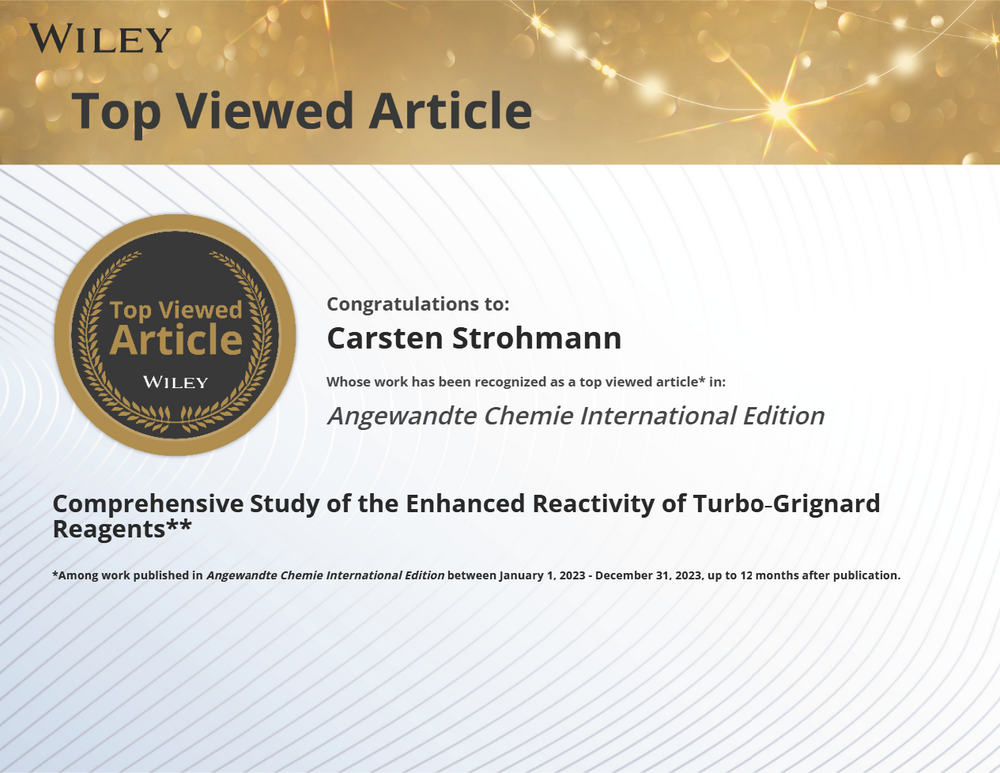
As a result of the collaboration between the members of Prof. Dr. Carsten Strohmann's group and Prof. Dr. Wolf Hiller's NMR team, a publication on the Turbo-Grignard-reagent was published in the renowned journal Angewandte Chemie in 2023. Crystallographic studies, quantum chemical calculations and NMR spectroscopic experiments in solution have provided deeper insights into the frequently observed increased reactivity of the Turbo-Grignard-reagent.
Part of the turbo-Grignard puzzle unraveled
This publication generated so much interest among readers that it was among the top 10% most-read publications of 2023 and for this received an award.
„Comprehensive Study oft he Enhanced Reactivity of Turbo-Grignard-Reagents“
A. Hermann, R. Seymen, L. Brieger, J. Kleinheider, B. Grabe, W. Hiller, C. Strohmann*
Angew. Chem. Int. Ed. 2023, e202302489.
Mechanistic Investigations into Selective Substitutions on Alkoxysilanes
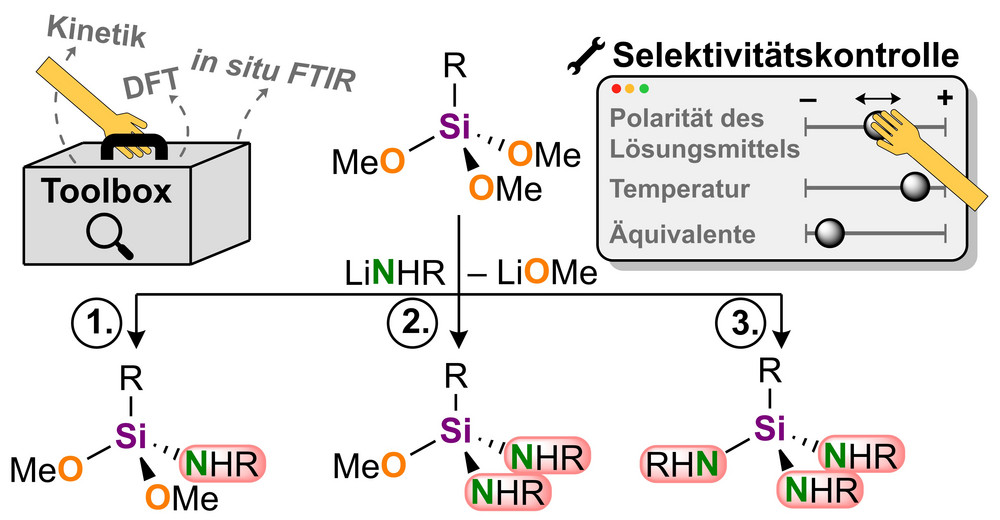
In our new publication in Inorganic Chemistry, we report on the selective substitution of methoxy groups in molecular silanes by primary lithium amides. Alkoxysilanes serve as controlled and selective precursors, offering an alternative to highly reactive chlorosilanes in Si–N bond formation.
By combining in situ FTIR spectroscopy and density functional theory calculations, we elucidated the mechanism of the monosubstitution and determined key kinetic parameters including reaction order and activation energy. Based on these findings, we established conditions that enable controlled di- and trisubstitution at alkoxy functionalities. The aggregation state of the lithium amide and solvent effects were found to be decisive in the reaction pathway and selectivity. Such functionalized alkoxysilanes represent key building blocks for silicon-based materials, for example in silicone synthesis or surface modification.
Further details can be found in the original publication:
Mechanistic Investigations of Selective Alkoxysilane Substitutions by Primary Lithium Amides: From Mono- to Di- and Trisubstituted Si–N-Functionalized Silanes:
J.-L. Kirchhoff, T. Mairath, M. Schöler, R. Risken, C. Strohmann
Inorg. Chem. 2025, 64, 13355–13363.
New insights into basic structures of ice with amines

In our new publication in Cryst. Growth Des. we report on structural studies of rare water structures with amines. By adjusting the stoichiometry, two structures with a higher and lower water content could be obtained for two different amines, forming complex hydrogen bond networks.
Due to a particularly high data quality of the structures, Hirschfeld atom refinements could be carried out, which allow fundamental insights into the bonding situation of hydrogen bonds. Further information can be found on the following page or in the original publication:
Crystal Structures of Water and Tertiary Amines: Hydrates or Ice with a Twist?
A. Schmidt, M. Schöler, T. Szidat, F. Otte, U. Englert*, C. Strohmann* Cryst. Growth Des. 2025, 25, 3644–3653.
19th Ferrocene Colloquium in Bochum
Following the eighteenth Ferrocene Colloquium in Düsseldorf, this year the nineteenth Ferrocene Colloquium took place at the Ruhr University Bochum. Founded in 2003, the conference offers young scientists the opportunity to present and discuss their research in the field of organometallic chemistry in form of poster contributions or short lectures.

In this year's conference from our own group Beata Moritz, Mara Schöler, Tristan Mairath, Paul Erik Schneider and Annika Schmidt took part as participants. While Beata, Mara and Tristan presented their research in the form of posters, Paul and Annika presented their current research in the form of two talks. Paul spoke about his current results in the field of Planar chiral ferrocenes as key compounds for asymmetrically controlled processes and Annika talked about Organometallic Intermediates of Anionic Polymerization - Basis for the Insertion of Functional Initiators.
In addition to several interesting short talks by motivated young scientists, Prof. Dr. Simon Aldrige (University of Oxford, UK), Prof. Dr. José Ruiz Lopes (University of Murcia, Spain) and PD Dr. André Schäfer (Saarland University, Saarbrücken) presented their research in three plenary lectures.
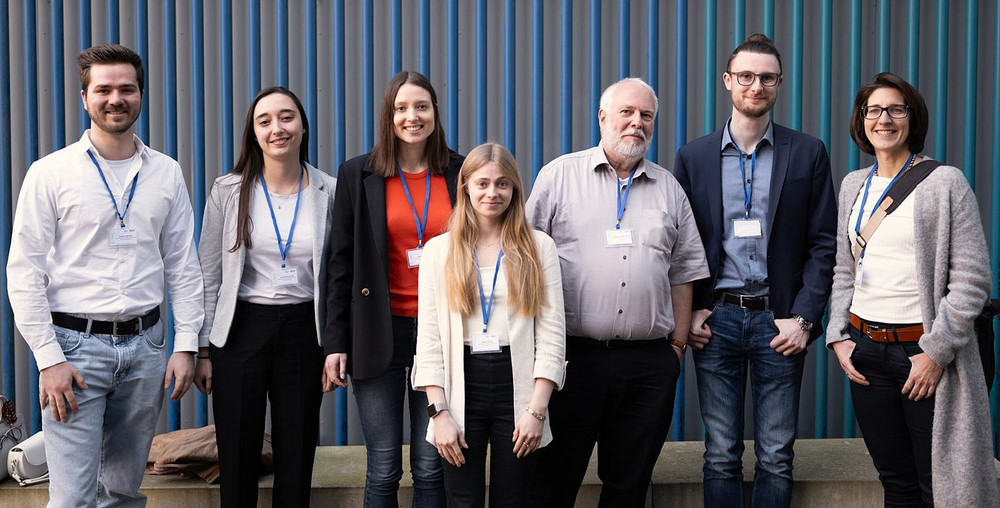
We would like to thank the organizers of this year's colloquium Prof. Dr. Nils Metzler-Nolte and Prof. Dr. Viktoria Däschlein-Gessner, a former member of our own group, for the successful planning and implementation of the conference, as well as all sponsors.
Chemiedozententagung in Braunschweig 2025
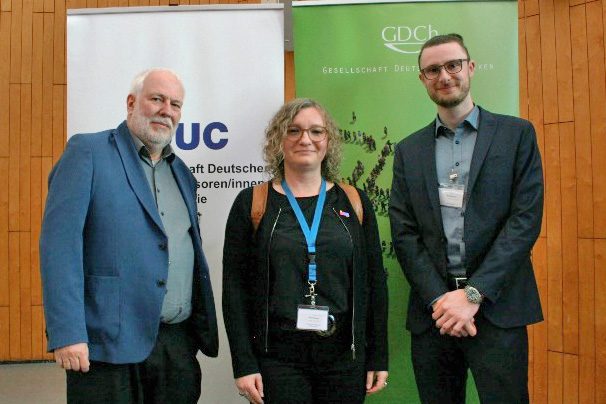
This year's Chemiedozententagung (CDT) took place from March 17 to 19, 2025 at the Technical University of Braunschweig. The event was organized by the German Chemical Society (GDCh) and the Arbeitsgemeinschaft Deutscher Universitätsprofessorinnen und -professoren für Chemie (ADUC). Paul Erik Schneider from our research group took part. Dr. David Van Craen and Dr. Elisabeth Kreidt from the field of inorganic chemistry from our faculty also participated, each with their own lecture.
The Chemistry Lecturers' Conference traditionally brings together junior research group leaders, postdocs and professors from all areas of chemistry and offers an excellent opportunity to discuss current research work and developments within the chemical community in Germany.
The conference also offered the opportunity for a personal exchange with Dr. Anna Krawczuk from the University of Göttingen, a cooperation partner of our group. We would like to congratulate her on her lecture award! In a pleasant atmosphere between scientific lectures, discussions and joint evening events, the meeting was used to exchange views on current projects, new ideas and future research collaborations.
We would like to thank the organizers of the CDT 2025 for a successful conference and look forward to the next one.
27th GDCh-JCF Spring Symposium 2025 in Münster
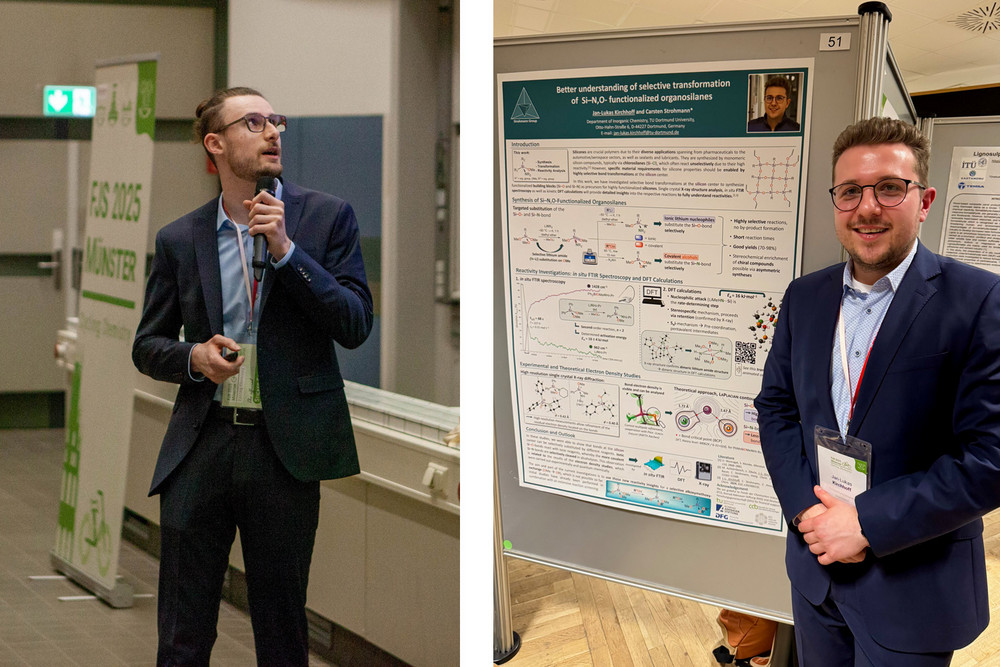
From March 12 to 15, 2025, the Strohmann group participated with a large group of doctoral candidates and students in the 27th Spring Symposium of the Young Chemists Forum (JCF) of the GDCh in Münster. The annual conference offers young scientists an excellent platform for scientific exchange, interdisciplinary networking and new impulses. The theme of this year's symposium was “Cycling Chemistry”.
As part of the scientific program, Paul Erik Schneider presented a lecture on the enantioselective lithiation of ferrocene derivatives for the synthesis of chiral ligands for asymmetric catalysis. Particularly pleasing: The lecture took place after the plenary lecture by Prof. Dr. Viktoria Gessner (Ruhr University Bochum) - a former doctoral student of the Strohmann group.
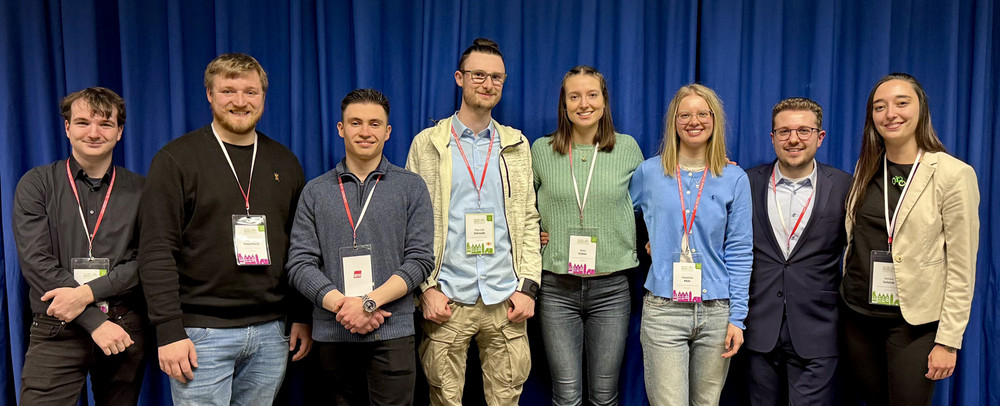
In addition to the lecture, our group was represented with numerous poster contributions, particularly from the fields of lithium and silicon chemistry. Among the active participants were: Jan Frederick Wappelhorst, Mara Schöler, Annika Schmidt, Kai Schäper, Tristan Mairath, Franziska Klotz, Jan-Lukas Kirchhoff, Beata Moritz as well as Tom Szidat.
Annika Schmidt was able to provide insights into the solvent-dependent process of anionic polymerization by investigating the structure and reactivity of the first carbolithiated intermediate. Jan-Lukas Kirchhoff presented his results on the mechanistic reactivity investigation of aminomethoxysilanes as part of a poster contribution. Beata Moritz was able to provide insights into the enantioselective synthesis of ligands for transition metals in her poster.
In addition, Jan-Lukas Kirchhoff, Annika Schmidt and Paul Erik Schneider were also involved in the organization as members of the JCF Dortmund and actively supported the conference behind the scenes.
We would like to thank the organizers of the JCF Regional Forums Münster, Duisburg-Essen and Dortmund for an all-around successful symposium - with inspiring presentations, diverse discussions and numerous valuable encounters.
Award for Annika Schmidt at the 18. Tag der Chemie
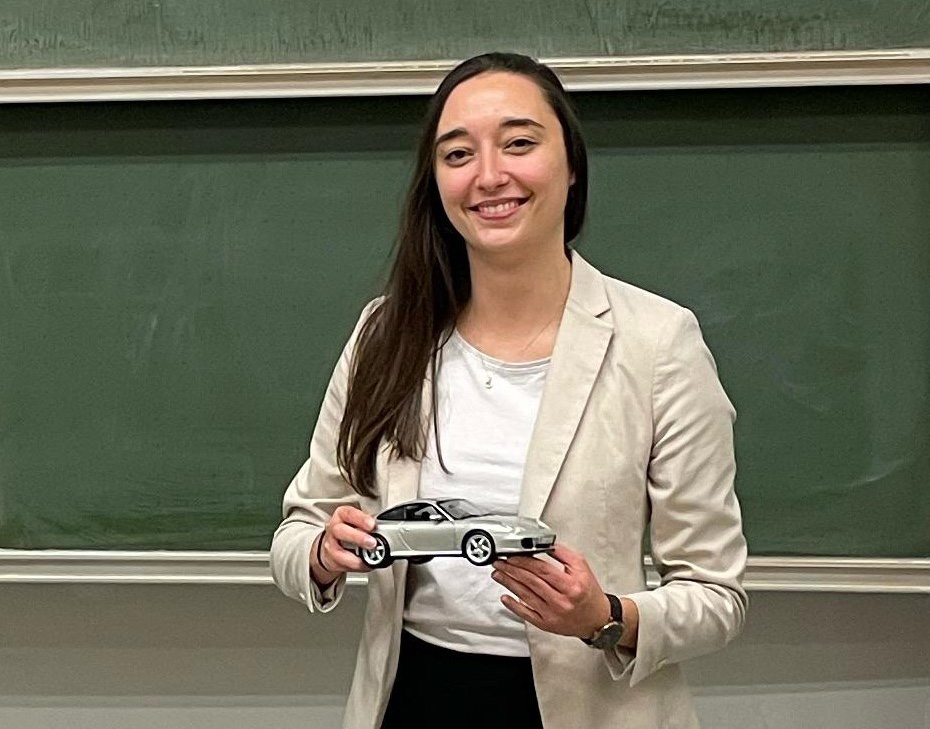
At this year's “18. Tag der Chemie” of the Faculty of Chemistry and Chemical Biology, Annika Schmidt was honoured with a lecture award for her lecture entitled “Insights into the Mechanism of Anionic Polymerization”.
In her lecture, she presented her current research findings on the mechanism of anionic polymerization, a long-standing polymerization technique with a wide range of applications in the chemical industry, for example in the production of car tires. The insights she has already gained into the mechanism allowed her to extend her research to the investigation of the reactivity of bio-based polymer building blocks, which she will continue to focus on in future research.
We would like to thank the organizers of the “18. Tag der Chemie” and the selection jury for the award.
We would also like to thank the Fonds der chemischen Industrie and the Studienstiftung des deutschen Volkes for their financial support.
Degrees and awards at the graduation ceremony on 18. Day of Chemistry
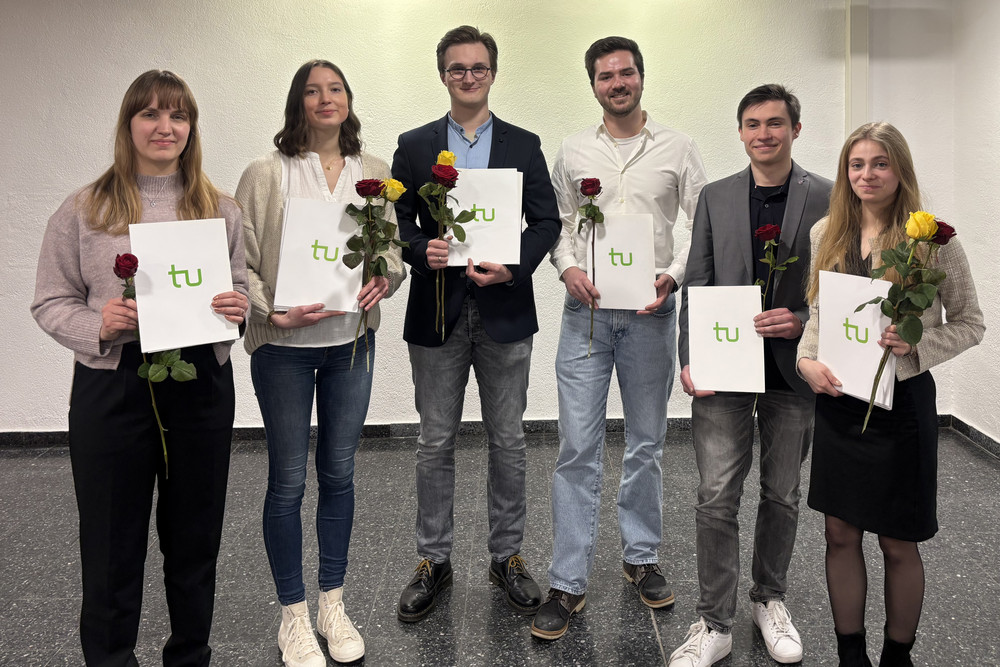
As per tradition, the Day of Chemistry took place this year on 7th February of 2025 to honor the graduates of the department of chemistry for their achievements. The day's program consisted of scientific lectures, poster flash talks and a poster session concluding with an awards ceremony for the bachelor's, master's and doctoral graduates.
From our group Beata Moritz, Mara Schöler and Kai Schäper successfully completed their Bachelor's degree and Arnold Ressel, Tamara Binnenbrinkmann, and Tristan Mairath successfully completed their Master's degree. Beata Moritz, Mara Schoeler and Arnold Ressel additionally were honored for particularly outstanding achievements.
We are delighted that Arnold Ressel will continue his academic career with a doctorate at the Freie Universität Berlin in the group of Prof. Dr. Hasenstab Riedel and that Tamara Binnenbrinkmann will start her doctorate in the group of Dr. Elizabeth Kreidt here at the TU Dortmund University. We also welcome Tristan Mairath as a doctoral student in our own group.
We congratulate all graduates on their outstanding achievements and wish them all the very best for their future.
Doctoral scholarship from the Studienstiftung des deutschen Volkes for Annika Schmidt
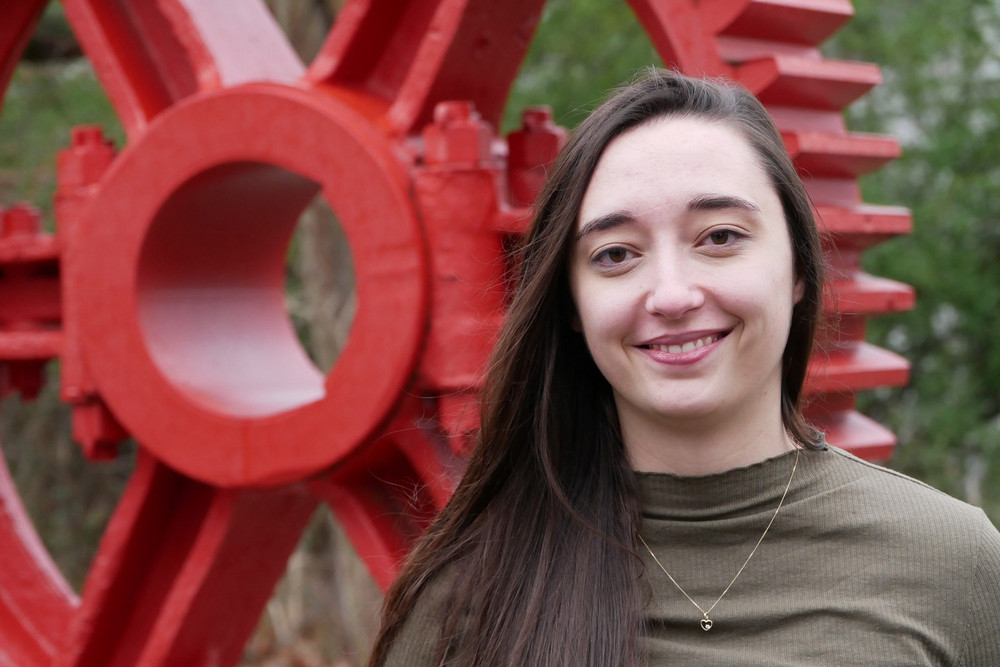
We congratulate Ms. Annika Schmidt on receiving a doctoral scholarship from the German National Academic Foundation.
In her doctoral thesis, Ms. Schmidt is researching anionic polymerization at the molecular level. By isolating relevant intermediates, she gains insights into the mechanism of the polymerization steps and uses this knowledge, among other things, for the targeted synthesis of functional initiators. Versatile analytical methods such as spectroscopic investigations, single crystal X-ray structure analysis or quantum chemical investigations are the tools she uses to investigate the highly reactive intermediates. In her current research, Ms. Schmidt continues to focus on bio-based polymer building blocks and understanding their reactivity.

The Studienstiftung des deutschen Volkes is one of the Federal Ministry of Education and Research's organizations for the promotion of gifted students and supports both talented students and doctoral candidates. The promotion of doctorates supports high-performing, socially responsible and versatile young researchers from various disciplines.
We would like to thank the Studienstiftung des deutschen Volkes for its generous funding and support and are very pleased that Ms. Schmidt was able to convince in the selection process.